A cosy, honest guide for thoughtful gift–givers
When you’re choosing a baby present, it’s easy to get lost in a sea of mass-produced items. However, craft-made baby gifts offer something much more special: warmth, craftsmanship, and a personal touch that parents remember. As a mum and maker behind Love & Stitch Kits, I’ve watched families connect deeply with handmade pieces that feel truly meaningful. In this guide, I’ll explain why craft-made baby gifts outshine factory-made alternatives every single time.
💛 1. Why Craft-Made Baby Gifts Matter
Every handmade item begins in someone’s hands — not on a conveyor belt.
Makers choose the materials, textures, colours, and finishes with intention. Moreover, they spend time perfecting each detail. There are no shortcuts. Each stitch, cut, or knot reflects the maker’s focus and skill.
This is why a crocheted rattle feels charmingly unique, while a mass-produced one often looks identical to thousands of others.
Handmade pieces carry real human care — and you can feel that the moment you hold them.
🎁 2. Personalisation Makes the Gift Truly Special
Nothing says “I chose this just for you” like personalisation.
Whether it’s a baby’s initials, custom colours, or a design selected for a specific family, a personalised gift instantly becomes more meaningful. In addition, it shows thoughtfulness at a level that mass-produced items rarely reach.
Parents remember:
- Who gave it
- Why was it chosen
- How it made them feel in those tender newborn weeks
As a result, these gifts usually stay in keepsake boxes long after the baby outgrows them.
🌿 3. Handmade Gifts Are Often More Eco-Friendly
Handmade makers often work with small batches, natural fibres, and minimal plastic. In contrast, mass-produced items usually travel long distances and rely on synthetic materials.1
Because of this, handmade gifts often come with:
- Lower environmental impact
- Better materials
- Reduced packaging waste
- Longer-lasting construction
Therefore, they’re an excellent choice for families who value conscious living.
🧸 4. Quality Over Quantity — Every Time
Mass-produced gifts aim to be inexpensive and quick to manufacture. I understand that we cannot make a blanket statement about all mass-produced gifts; however, many are designed to be inexpensive and quick to manufacture. As a result, they often use thinner fabrics, weaker stitching, and lower-quality finishes. For example, several budget baby carriers and slings sold online failed safety and durability tests — showing issues such as straps splitting at the seams or structural failures — as highlighted in a Which? investigation.
In contrast, craft-made baby gifts prioritise craftsmanship. We carefully select materials that are safe, soft, durable, and beautiful, and we continually refine our designs based on feedback from parents. This approach results in gifts that last longer, age gracefully, and often become cherished family keepsakes.
😊 5. Supporting a Maker Supports a Dream
When you buy handmade, you’re not paying for a factory or a huge warehouse.
You’re supporting:
- A mum working during nap times
- A maker building a small business
- Someone who genuinely celebrates every single order
- Creativity, skill, and passion
Handmade businesses often reinvest in better tools, safer materials, and more thoughtful designs — so every purchase has a ripple effect.
🎀 Final Thoughts: Craft-Made Baby Gifts Carry Heart
A personalised, handcrafted baby gift does more than fill a nursery shelf. It brings warmth, meaning, and a story that stays with a family for years.
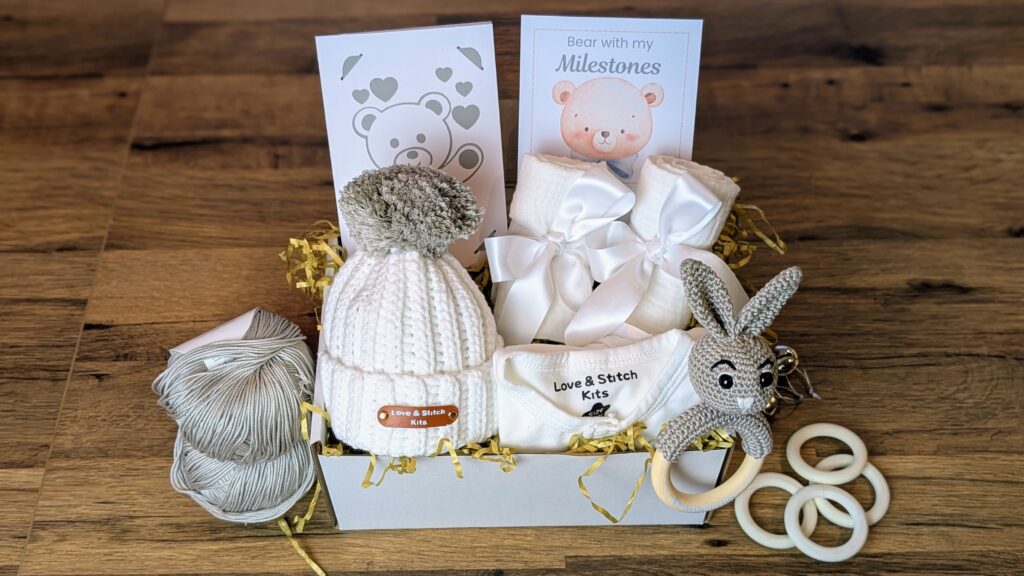
Whether you’re choosing a crocheted rattle, a newborn beanie, a milestone kit, or another handmade treasure, you’re giving something that can’t be replicated by the thousands.
You’re giving love — quite literally stitched in.
If you love meaningful presents, you might also enjoy my guide to newborn gifts parents actually use.
- According to Kraft Space, handmade products often leave a smaller environmental footprint than mass–produced items — thanks to lower waste, sustainable materials and careful production. ↩︎